
Making homemade candy is fun for everyone. You just need a few ingredients and some basic tools. This way, you can make beautiful treats that everyone will love.
Making magic candy is easy. Just follow a simple candy making recipe. You’ll make amazing treats perfect for snacks, gifts, or parties.
Whether you’re new to candy making or have done it before, this recipe will help. It ensures your candy always turns out great.
The Enchanting World of Homemade Magic Candy
Making magic candy at home is more than just a recipe. It’s a journey filled with joy and wonder. You get to unleash your creativity, try new flavors, and make something truly special.
What Makes Magic Candy Special
Magic candy is unique because it can surprise and delight you. It might change color, fizz, or even change flavor. Making it at home lets you create a magical experience.
Benefits of Making Candy at Home
There are many perks to making candy at home. You can save money, customize your treats, and control the quality. Let’s dive into these benefits.
Cost Savings
Homemade candy can be cheaper than store-bought. You can buy ingredients in bulk and make lots at once. This way, you spend less per piece.
Customization Options
Homemade magic candy lets you get creative. You can pick your favorite flavors, colors, and extras. This way, you make candies that you love.
Quality Control
When you make candy at home, you’re in charge. You can use only the best ingredients and avoid additives. This ensures your candy is top-notch.
- Control over ingredients
- Ability to customize flavors and colors
- Potential for cost savings through bulk purchasing
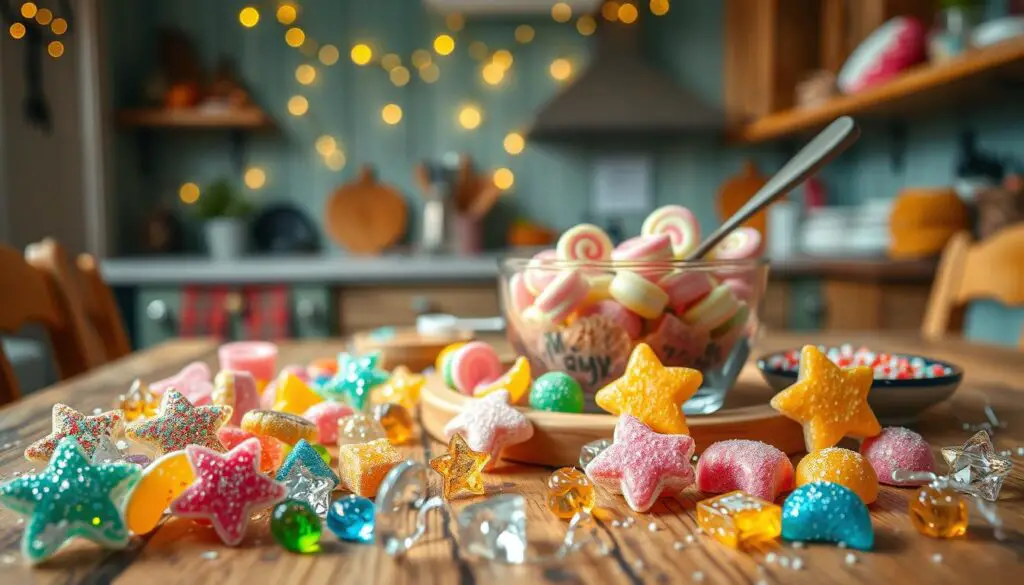
Essential Ingredients for Your Magic Candy Recipe
Making magic candy needs careful picking of ingredients. You’ll need simple sugars and complex additives. The right mix is key for the magic in your candy.
Base Ingredients
The base of magic candy is its foundation. It’s made of sugars and sweeteners, and binding agents. These hold the candy together.
Sugars and Sweeteners
Sucrose and corn syrup are common in candy making. They add sweetness and stop crystals from forming.
Binding Agents
Gelatin and cornstarch are used for texture and setting. They make the candy firm.
Special Additives for Magical Effects
For magic in your candy, you need special additives. These include food-grade chemicals and natural color-changers.
Food-Grade Chemicals
Food-grade chemicals like thermochromic pigments change color with temperature. They add magic to your candy.
Natural Color-Changing Ingredients
Or, you can use natural ingredients like butterfly pea flower extract. It changes color without synthetic chemicals.
Optional Flavor Enhancers
To make your magic candy even better, add flavor enhancers.
Extracts and Oils
Flavor extracts and essential oils give unique tastes. Peppermint extract and lemon oil are favorites.
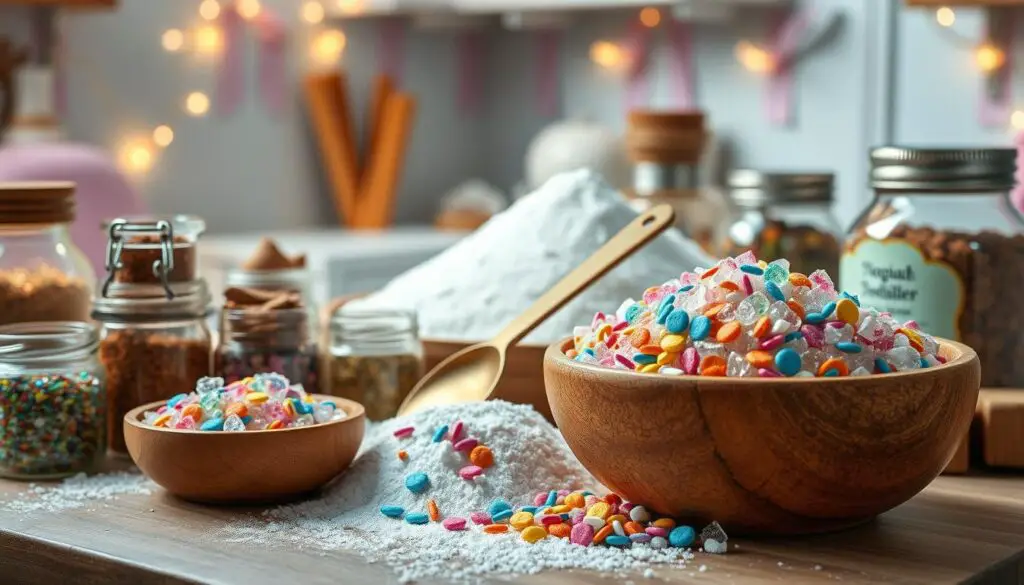
Tools and Equipment You’ll Need
To start making magic candy, you’ll need some basic and special tools. The right equipment makes the process easier and ensures your candy is perfect.
Basic Kitchen Tools
First, you’ll need basic kitchen tools. You’ll need measuring equipment like digital scales and measuring cups. These help you measure your ingredients accurately.
Measuring Equipment
Getting the measurements right is key in candy making. Use digital scales for exact weight measurements.
Mixing Utensils
You’ll also need tools for mixing. Silicone spatulas and wooden spoons are great for mixing your candy mixture well.
Specialized Candy-Making Equipment
For perfect candy, you need special tools. A candy thermometer is essential for the right temperature.
Silicone Molds
Silicone molds are great for shaping your candy. They’re flexible, making it easy to get your candy out once it’s set.
Safety Equipment
When working with hot sugar, safety comes first. Heat-resistant gloves protect your hands, and protective eyewear keeps your eyes safe from splatters.
Heat-Resistant Gloves
Heat-resistant gloves are crucial for handling hot pans and utensils.
Protective Eyewear
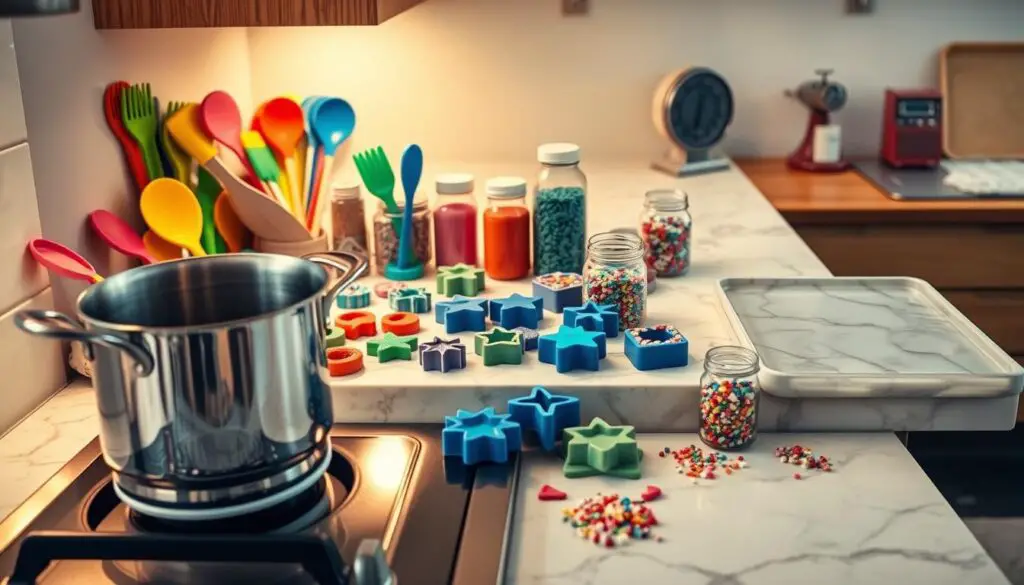
Preparing Your Kitchen for Candy Making
Before you start making candy, get your kitchen ready. A tidy kitchen makes cooking easier and helps you get better results.
Setting Up Your Workspace
First, clear your countertops. Then, organize your tools and ingredients so they’re easy to find. Counter organization is crucial for efficient candy making.
Counter Organization
Put your equipment in a logical order. Keep things you use often within reach. This saves time and prevents accidents.
Ingredient Preparation
Measure and prepare your ingredients before starting. Having everything ready helps you focus on the recipe.
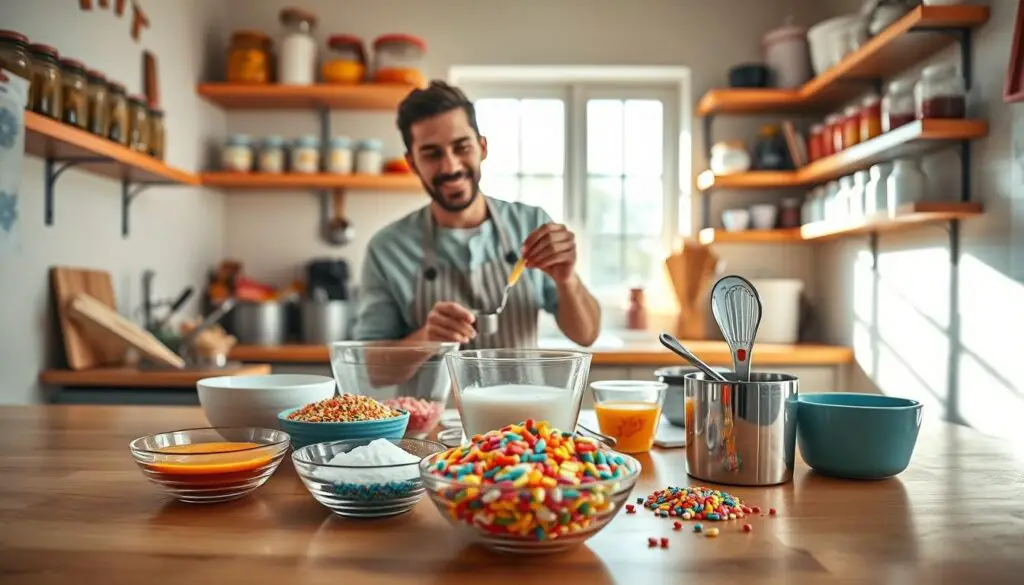
Safety Precautions
Candy making involves hot sugar and chemicals, so safety precautions are essential.
Handling Hot Sugar
Always use a candy thermometer to check your sugar’s temperature. Never leave hot sugar alone, as it can get too hot or crystallize.
Chemical Safety
When using additives or colorants, work in a well-ventilated area. Follow the instructions on the packaging carefully.
Temperature and Humidity Considerations
The temperature and humidity in your kitchen affect your candy’s texture and consistency.
Ideal Room Conditions
Try to keep your kitchen cool and dry. The best temperature for candy making is between 65°F to 75°F (18°C to 24°C).
Weather Factors
High humidity can affect your candy’s quality. Adjust your recipe or working conditions if needed.
The Ultimate Magic Candy Recipe
Making magic candy is an art that needs precision and a bit of magic. To get the perfect mix of taste and wonder, follow our guide step by step.
Preparing the Base Mixture
The base of magic candy is key. Start by measuring your ingredients carefully.
Measuring Ingredients
Use a digital scale for precise measurements. Accuracy is crucial in candy making, as it affects the final texture and taste.
Initial Heating Process
After measuring, mix your ingredients in a saucepan. Heat it over medium heat, stirring constantly. This process requires patience, as you’ll need to wait for the right temperature.
Adding the Magic Elements
Now, add the magic elements to your base mixture.
Timing for Special Effects
The timing of adding special effects, like color-changing or fizzing agents, is key. Add these elements at the right moment for the desired effect.
Mixing Techniques
Mix in your special effects gently. Avoid overmixing, as it can mess up the candy’s texture.
Cooking Techniques
Cooking your candy mixture to the right temperature is crucial for the right consistency.
Temperature Stages
Watch your mixture’s temperature closely, as it goes through stages. Use a candy thermometer for accuracy.
Visual Cues for Readiness
Look for visual cues like color and texture changes to know when your candy is ready.
Cooling and Setting Process
After cooking, cool and set your candy.
Pouring into Molds
Pour your hot candy mixture into molds or onto a prepared surface. Work quickly, as it will set fast.
Setting Times
Let your candy set for the recommended time. Patience is key here, as setting times vary by size and thickness.
Creating Different Magical Effects
Magic happens when you add special ingredients to your candy. This creates a world of wonder and surprise. The art of candy making becomes even more fascinating when you can create candies that change color, fizz, glow, or transform in flavor.
Color-Changing Candy
Color-changing candy is a mesmerizing treat. It’s made with special ingredients that react to temperature or pH changes. This causes the color to shift.
pH-Sensitive Ingredients
pH-sensitive ingredients change color with acidity or alkalinity changes. For example, adding citric acid can cause a color shift.
Temperature-Reactive Dyes
Temperature-reactive dyes change color with temperature changes. These dyes can make candies change color when held or eaten.
Fizzing and Popping Candy
Fizzing and popping candies add an auditory and tactile dimension. This effect is achieved through carbonation techniques or specific sugar types.
Carbonation Techniques
Carbonation involves adding carbon dioxide to the candy mixture. This creates a fizzing effect when consumed.
Pop Rocks-Style Effects
Pop Rocks-style effects are created with candies containing small pockets of carbon dioxide. When the candy meets saliva, the carbon dioxide is released, creating a popping sensation.
Glowing Candy
Glowing candy is made with food-safe luminescent ingredients or UV-reactive options. These ingredients absorb and emit light, creating a glowing effect.
Food-Safe Luminescent Ingredients
Food-safe luminescent ingredients are safe for consumption while providing a glowing effect.
UV-Reactive Options
UV-reactive options react to ultraviolet light. They create a glowing effect under black light.
Flavor-Transforming Candy
Flavor-transforming candy changes flavor during consumption. This provides a surprising experience.
Sequential Flavor Release
Sequential flavor release involves layering different flavors. This way, the flavor changes as the candy is consumed.
Surprising Taste Combinations
Surprising taste combinations involve pairing seemingly incompatible flavors. This creates a unique taste experience.
Seasonal and Themed Magic Candy Variations
Make your magic candy special with seasonal themes. It’s perfect for holidays, birthdays, or educational events. Themed magic candy can make any celebration stand out.
Holiday-Specific Recipes
Create magic candy for your favorite holidays. For example, you can make:
- Halloween glow-in-the-dark treats by adding glow-in-the-dark powder to your candy mixture.
- Christmas color-changing peppermints by using temperature-sensitive color-changing ingredients.
Halloween Glow-in-the-Dark Treats
To make glow-in-the-dark candy, add glow-in-the-dark powder to melted candy. Pour it into molds for a spooky treat.
Christmas Color-Changing Peppermints
For Christmas, use temperature-sensitive ingredients. They change color when touched or when the temperature changes.
Birthday and Celebration Candy
Make birthdays special with themed magic candy. Ideas include:
- Surprise-center candies that change flavor or color when bitten into.
- Personalized magic lollipops with custom flavors or colors.
Surprise-Center Candies
Create surprise-center candies by layering flavors or colors. When bitten into, the surprise is revealed.
Personalized Magic Lollipops
Personalize magic lollipops with custom molds and special ingredients. Create unique flavors or effects.
Educational Magic Candy
Magic candy is great for learning, such as:
- Science-themed effects that demonstrate chemical reactions or color changes.
- Color-mixing demonstrations that teach about primary and secondary colors.
Science-Themed Effects
Use magic candy to show science concepts. It makes learning fun and interactive.
Color-Mixing Demonstrations
Make color-mixing demonstrations with candies in different colors. Show how they mix to create new colors.
By adding seasonal and themed elements, your magic candy creations become unforgettable and fun.
Troubleshooting Common Issues
Candy making is an art that needs patience, skill, and problem-solving skills. Even experienced candy makers face issues. Knowing how to fix them can make all the difference.
Candy Won’t Set Properly
One big problem in candy making is when it won’t set right. This can happen for many reasons, like temperature and humidity.
Temperature Problems
Temperature is key in candy making. If the mix isn’t heated right, the candy won’t set. Use a candy thermometer for accuracy.
Humidity Solutions
High humidity can stop candy from setting. To fix this, work in a dry place or use a dehumidifier if needed.
Burnt or Crystallized Sugar
Burnt or crystallized sugar can mess up a batch of candy. It’s important to know how to prevent and fix it.
Prevention Techniques
To avoid burnt sugar, stir constantly when heating. Don’t overheat. Using a heavy-bottomed pan helps with even heat.
Salvaging Failed Batches
If sugar crystallizes, try to save it. Reheat the mix and add a bit of water or corn syrup to stop more crystallization.
Magic Effects Not Working
Sometimes, magic effects in candy don’t work as hoped. This can be because of bad ingredients or timing.
Ingredient Quality Issues
Using high-quality ingredients is crucial for magic effects. Check your ingredients’ freshness and purity.
Timing Adjustments
When you add magic elements can affect their effect. Try different timing to see what works best.
Flavor Problems
Flavor issues can be from unbalanced tastes to bad aftertastes. It’s important to know how to balance and adjust flavors.
Balancing Strong Flavors
To balance strong flavors, start with small amounts. Taste as you go and adjust the seasoning.
Fixing Unpleasant Aftertastes
If candy tastes bad after, try adding a complementary flavor. For example, a bit of citrus can balance bitterness.
Conclusion
With this simple recipe and guide, you can make magical homemade treats. These treats will amaze both kids and adults. Making magic candy is not only fun but also a great way to be creative.
By following the steps and tips, you can create candy with cool effects. You can make candy that changes color, fizzes, glows, or even changes flavor. The fun part is you can make it for any special event or theme.
As you try new ingredients and techniques, you’ll find even more ways to make your candy special. Whether it’s for a holiday, a birthday, or just for fun, you’re ready to make unique and amazing treats.
FAQ
What makes magic candy different from regular candy?
Magic candy has special ingredients and techniques. These create fun effects like color-changing, fizzing, or glowing. It’s a treat that’s both fun and interactive.
Are the ingredients used in magic candy safe to eat?
Yes, magic candy ingredients are food-grade and safe. But, it’s important to handle and prepare them properly for safety.
Can I customize the flavor and color of my magic candy?
Yes, you can change the flavor and color of your magic candy. Use extracts, oils, and food-grade colorants. You can mix different things to get unique effects.
What is the ideal temperature and humidity for making magic candy?
The best temperature and humidity for making magic candy depend on the recipe. Generally, keep it between 65°F to 75°F (18°C to 24°C) and humidity below 60%.
How do I achieve the color-changing effect in magic candy?
For color-changing, use pH-sensitive ingredients or temperature-reactive dyes. These change color with temperature or pH changes, creating a magical effect.
Can I make magic candy without specialized equipment?
You can make magic candy with basic kitchen tools. But, specialized equipment like silicone molds can make it easier and more efficient.
How do I store magic candy to maintain its quality and effects?
Store magic candy in an airtight container, away from sunlight and moisture. Wrap individual pieces in plastic wrap or wax paper to keep them fresh.
Can I make magic candy for special occasions, such as holidays or birthdays?
Yes, make magic candy for special occasions with themed ingredients and colors. Customize it to fit the occasion for a unique and memorable treat.